
After the release of Greta Gerwig’s Barbie, many of us have been nostalgic about our Barbie dolls and reminisced about our good old days. I must admit, in today’s dazzling world of pop culture, few icons shine as brightly as Barbie dolls. Barbie has not only captured the hearts of Barbie enthusiasts but has also left an indelible mark on society and media. The cultural impact of Barbie has become a unique phenomenon over the past decades. But I assume the knowledge of many of us is only limited to its beautiful life-like dolls, not knowing much about the story behind the creation of Barbie and its evolution over the years. Thanks to contemporary media, we all know (and have been brutally traumatized!) by ever-changing beauty standards. From narrow waists and bright skin to blue eyes and blonde hair, many say Barbies have not been a good influence over the years. However, owing to the efforts of those who speak up and act, lately, we have experienced a shift of viewpoint and come to embrace diversities and imperfections. And Barbies are no exception, as thanks to the transformations the have undergone, we are now witnessing Barbie diversity. What do you say we start our journey to explore the story behind its creation and its evolution over the years?
1. Birth of a Legend: The Story Behind the Creation of Barbie
It all began in 1959 when Ruth Handler, a businesswoman and co-founder of Mattel company (a toy manufacturer) made a life-changing decision. Up to that day, toys were often given infant roles (I suggest taking a quick look at vintage baby dolls), and when Handler saw her daughter giving adult roles to her dolls, she was inspired to change the fate of the toy industry once and for all. Luckily for Ruth, her husband Elliot was another co-founder of the company. But when after hearing her idea, he seemed reluctant (not so lucky after all, right? Wrong!). During her trip to Germany in 1956, she came across what exactly she had in mind: Bild Lilli! Lilli was an adult figure primarily intended for adults, but she later became famous with children who liked playing dress-ups (I mean who doesn’t, right?). So, I guess you can more or less guess the rest of the story. She bought 3 Lillis! Yes, three: one for her daughter, Barbara, of whom Barbie’s name was inspired later, and two to take to her company. Later she redesigned Lilli and turned it into the first Barbie.
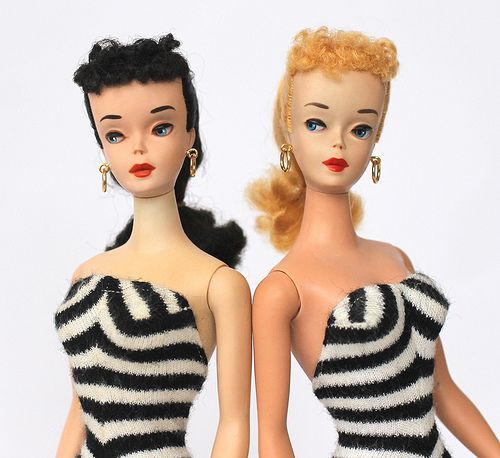
Eventually, the first Barbie doll was out. I’m sure many of us have seen pictures of her wearing a zebra-striped swimsuit. The first Barbie dolls were manufactured in Japan and their clothes were interestingly hand-stitched. But things didn’t go smoothly in the beginning. Mattel was sued and accused of having stolen Greiner & Hausser’s (the company that manufactured Bild-lilli) patent for Bild-Lilli’s hip joint. They were also accused of copying Bild-lilli and misleadingly introducing Barbie as their original design. Later Mattel bought Greiner & Hausser’s copyright and patent rights for the Bild-Lilli doll, and there it was, problem solved!
From their early stages, Barbie dolls embodied fashion and maturity like no other, reflecting the era’s trend. Not long after, inspired by her son’s name, Ruth Handler introduced Barbie’s boyfriend, Ken. Barbie quickly captured the hearts of young girls and set the stage for an unprecedented toy revolution. Barbie dolls were the first toys ever advertised through TV commercials. However, as expected, many parents were against Barbie’s adult-like figure (particularly the breasts!). But soon enough Barbie was welcomed in almost all around the world.
Long story short, from the 1960’s onwards, the introduction of new hairstyles, clothing lines, and themed outfits allowed Barbie to embody various professions and lifestyles. From the Mod era to the Hippie movement, Barbie was a reflection of the cultural shifts of the times. Today, 100 Barbie dolls are sold evert minute. Can you believe that?!
2. Critiques and Celebrations: Barbie’s Controversies
Evolution of Barbie has not been a time of its life, really. Perhaps one of the most enduring critiques about Barbie boils down to her physical proportions, which have been considered unrealistic and potentially harmful. As I mentioned earlier, Barbie’s original design had an impossibly slender waist, long legs, and a tall stature that did not align with the typical proportions of a human body (if only it could!). Many critics argued that these unrealistic beauty standards could heavily lead to body dissatisfaction and promote an unhealthy body image, specifically among young girls.
Yet another one of Barbie’s controversies leading to a strong backlash is her being involved with promoting a culture of consumerism. Remember Barbie and Ken’s shiny cars, fancy clothes, shoes, bags and jewelry? Well according to some, if that’s not materialism, then what is? Those criticizing Barbie’s expansive wardrobe, numerous accessories, and ever-changing playsets argue that by continuously releasing new dolls and accessories, Barbie encourages the idea that happiness and fulfillment come from acquiring more things rather than from personal growth or meaningful experiences.
But wait, there’s more! They also say that Barbie’s emphasis on fashion and appearance reinforces the notion that a person’s value is primarily determined by their outward looks. That is, Barbie in stylish clothing and various roles might overshadow the importance of inner qualities, talents, and character development. What they ultimately mean is that the portrayal of a glamorous lifestyle and the pursuit of an idealized image can contribute to societal pressure to conform to certain beauty standards and aspirations.
This pressure can influence how individuals perceive their self-worth and identity, and it might impact their attitudes toward consumption because we all know how impressionable youngsters are, right? But the story doesn’t end here, environmentalists also say that the production of plastic toys, packaging waste, and the carbon footprint from manufacturing contribute to ecological challenges. The constant cycle of producing new dolls and accessories can contribute to resource depletion and waste generation. I mean, who can oppose that?!
But what’s interesting is Barbie’s openness to criticism and new ideas. I mean the journey has not been immune to criticism and I think what has led to Barbie’s survival, is Mattel’s willingness to change to stay relevant and even be an advocate for change. The company acknowledged Barbie’s unrealistic bodily proportions as early as the 1990s. In the late 1990s, Mattel introduced a “Butterfly Art” Barbie with a more proportionate body shape. Although not a radical departure from the original design, this was an early acknowledgment of the concerns raised by critics.
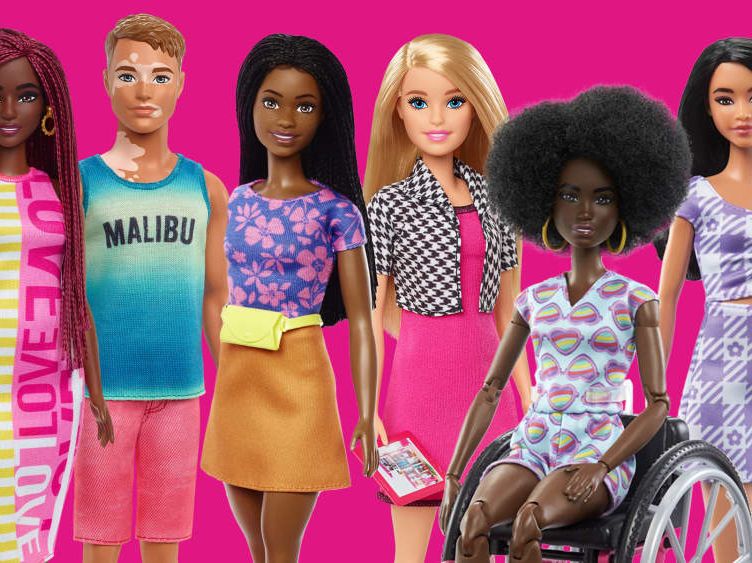
Wait! We’re not done yet. In response to concerns about promoting consumerism and addressing the broader societal implications of Barbie’s influence, Mattel has taken several steps to adapt, evolve, and engage with these critiques. While challenges remain, Barbie’s efforts reflect a commitment to responsible messaging and positive impact. One of the most notable shifts in Barbie’s history has been the brand’s embrace of diversity and inclusion. In response to critiques about a lack of representation, Mattel introduced Barbie dolls with different ethnic backgrounds, skin tones, and facial features. Not all human beings are blue-eyed and blond, right?
Also, Barbie has expanded her range of narratives beyond fashion and appearance. The brand now offers dolls that represent a wide variety of careers, interests, and passions. By showcasing dolls pursuing various fields including science, sports, arts, and more, Barbie diversity encourages girls to focus on their talents and aspirations rather than just material possessions. What’s more, black Barbies, Asian Barbies, handicapped Barbies and Barbie Fashionistas Vitiligo are no longer a dream.
To address environmental concerns, Barbie has taken steps to improve sustainability. The brand has introduced dolls made from more eco-friendly materials and explored reduced packaging. These efforts reflect a commitment to reducing the environmental impact associated with manufacturing and consumption. By diversifying their dolls and acknowledging a wider range of appearances, abilities, and backgrounds, Barbie aims to promote a more inclusive and realistic representation of the world. So, I must say, Barbie has reached mastery in embracing change while balancing nostalgia and innovation.
3. Beyond Playtime: Barbie’s Influence on Pop Culture and Media
The Cultural Impact of Barbie is obvious to almost most of us. We’re all well aware of how social attitudes change. So, what did Barbie do? it adapted. The 1970s and ’80s brought forth a more diverse range of Barbie dolls, embracing different ethnicities and careers. Barbie became an astronaut, doctor, athlete, and more, inspiring generations of young girls to dream big. The introduction of the “Black Barbie” and “Hispanic Barbie” marked important steps towards inclusivity.
As I mentioned earlier, from a conventional attitude toward women’s place in the world to an empowered stance, Barbie underwent a huge transformation as a cultural icon. The 21st century brought about a whole new collection of Barbies. The “I Can Be” line continued to encourage girls to explore various careers, while Barbie’s online presence expanded through web series, social media, and video games, connecting with new generations in innovative ways. As a member of the 1990’s generation, I remember being obsessed with Barbie accessories, from stationary to clothes. I was also a huge fan of Barbie video games. So, the influence it has on the minds of youngsters is truly profound and it is not merely limited to playtime.
In recent years, Barbie has adapted to changing consumer sentiments by incorporating sustainability practices and diversifying body types. The introduction of curvy, tall, and petite Barbie dolls reflects a commitment to promoting body positivity and inclusivity. From a simple plaything to a symbol of empowerment and diversity, Barbie’s evolution reflects the societal shifts, values, and aspirations of different eras. Her enduring appeal lies not only in her aesthetic transformation but in her ability to adapt and stay relevant, inspiring generations of individuals to dream big and embrace change.
So, who here doesn’t know how much of a trendsetter Barbie has been? Her wide range of outfits, glamorous accessories, and elegance have been carved into the collective consciousness. Her various incarnations have mirrored shifts in ideals, from the “All-American” look of the 1950s to the diverse representations of body types and skin tones in recent years. Barbie’s evolution has played a role in challenging traditional beauty standards and promoting greater acceptance of different appearances.
Barbie’s influence on pop culture and media extends beyond her physical presence. Her appearances in animated movies, television shows, and web series have brought her narratives to life and expanded her impact. The Barbie film franchise, which began in the 2000s, has provided entertainment for audiences of all ages, promoting positive messages and encouraging imaginative play.
Many Barbie collectors pay colossal amounts of money to get a hold of vintage Barbie, simply because they appreciate pop culture history. The nostalgia Barbie brings to the minds of many has made her an icon, a symbol of a bygone era while sparkling renewed interest in younger generations. To me, Barbie’s image can be a canvas for exploring broader themes in thought-provoking ways. From comedians to artists, creators have used Barbie as a vehicle to comment on consumerism, gender roles, and societal values. If we sense a problem about the way Barbies are presented, we can explore it, address it, and then attempt to change it by reacting to it. As it has been the case with Barbie and her controversies. How it has adapted itself to newer stances and viewpoints towards femininity and gender roles for example, is itself very impressive.
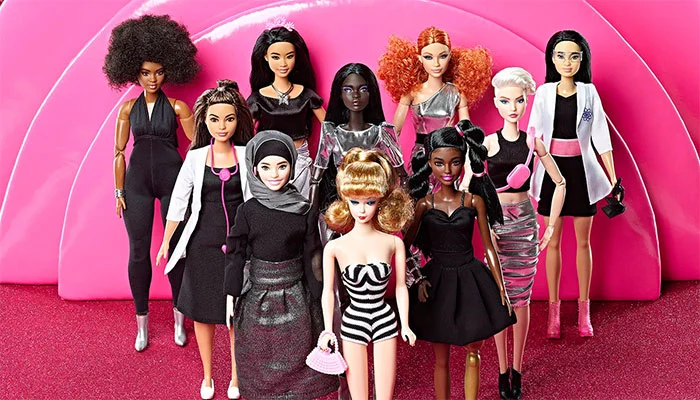
At last, I should say, in a world where pop culture icons flicker like shooting stars, Barbie’s brilliance remains unwavering. Greta Gerwig’s Barbie film release kindled nostalgia in many, igniting conversations that reached far beyond the realm of toys. For many, Barbie is a symbol of endless possibilities and has not only captured the hearts of enthusiasts but has woven her threads into the very fabric of society and media. The cultural impact of Barbie has transformed her from a simple plaything into a phenomenon that transcends generations.
Barbie’s journey, however, was not without its share of critiques. The narrative shifted from initial concerns about unrealistic beauty standards to a deeper reflection on the influence of consumerism. But in this storm of criticism, Barbie more or less demonstrated her openness to change. Responding to societal shifts, it has evolved by diversification, empowerment, and environmental consciousness. From breaking down barriers of representation to introducing sustainability practices, Barbie showcased an ability to embrace transformation while remaining true to her essence. Barbie’s cultural resonance extended to pop culture and media. She navigated the shifts of time, mirroring the changing ideals of beauty, diversity, and empowerment. Barbie’s appearances in movies, TV shows, and digital platforms not only entertained but also conveyed positive messages, inspiring new generations to dream, believe, and achieve.
In the end, evolution of Barbie is an inspiring journey. What Ruth Handler created isn’t just a doll; she’s an emblem of adaptability, a symbol of a great many things. Her journey has traversed decades, weaving her image into the tapestry of our lives. From her zebra-striped swimsuit to her modern-day looks, Barbie has illuminated the path from nostalgia to innovation. In a world ever-changing, she stands as a beacon, reminding us that while trends may come and go, the essence of Barbie endures.