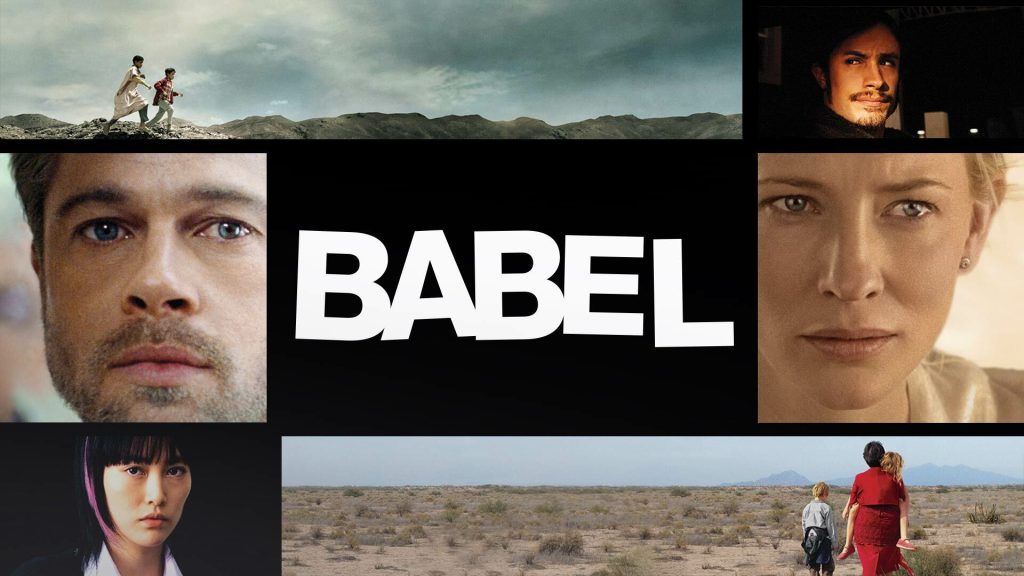
The 2006 film Babel, directed by the visionary Alejandro G. Iñárritu, isn’t just a movie; it’s a profound cinematic experience that continues to resonate. Its interwoven narratives span continents and cultures, forming a complex tapestry of human connection and disconnection. At its heart lies the profound impact of language—its presence, its absence, and the myriad misinterpretations arising from both. This Babel film analysis delves into how language barriers, coupled with the failure or refusal to communicate, can lead to profound miscommunication, hurdles, and ultimately, heart-wrenching tragedies.
Babel serves as a modern-day parable, echoing the biblical tale of the Tower of Babel. In that ancient story, humanity’s ambitious attempt to build a tower reaching heaven was thwarted by a divine intervention that confused their languages, leading to chaos and dispersal. In Iñárritu’s masterpiece, however, the “confusion of languages” isn’t divine punishment but a deeply human condition, stemming from our inherent limitations in communication, compounded by our choices. The film reveals how this condition relentlessly leads to tragedy of misunderstanding. Beyond that, Babel masterfully illustrates the butterfly effect: how the seemingly isolated actions of people in faraway places can, through a chain of miscommunication and unintended consequences, profoundly and tragically affect other people on entirely different sides of the world.
In this Babel movie analysis, I intend to explore not just characters who speak different languages but the experience of linguistic isolation, the crushing weight of being misunderstood, and the desperate struggle to bridge communication gaps. It forces us to confront how language, often seen as a tool for connection, can just as easily become an impenetrable wall. More acutely, it dissects the psychological toll these barriers inflict, revealing how deeply they wound the human psyche and distort our perceptions of self and others. The film compellingly illustrates that when people can’t communicate, and crucially, when they won’t communicate, tragedies inevitably occur in their paths, often reaching far beyond their immediate circles.
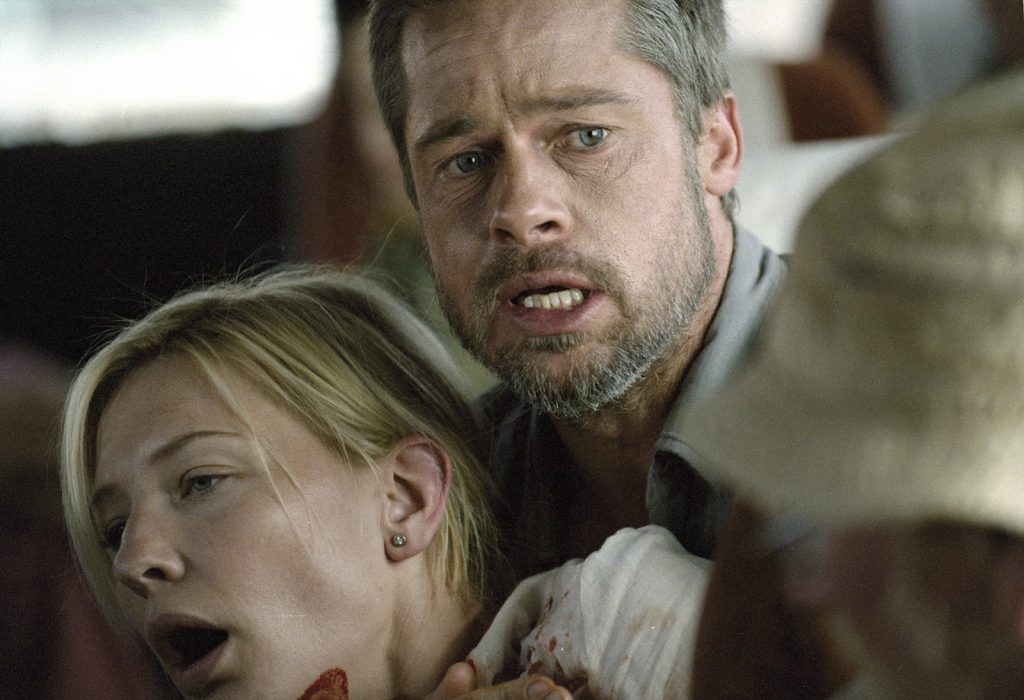
Babel, the Desperate Silence, and the Catalyst: Richard and Susan and the Ill-fated Shot in Morocco
The narrative thread involving Richard (Brad Pitt) and Susan (Cate Blanchett), an American couple on a strained Moroccan vacation, offers the most visceral demonstration of language as a barrier. After Susan is shot by a stray bullet, their idyllic escape devolves into a nightmare. Stranded, their most debilitating hurdle is overwhelmingly linguistic. The bullet, on the other hand, has a complex story behind it, which only adds more depth to Babel’s intricate web of cause and effect. Ignited by the actions of two Moroccan brothers, Yussef and Ahmed, the story of the bullet seems minor and trivial at first glance. However, it soon becomes the central pivot upon which the entire global narrative turns. The two brothers’ acquisition of a rifle, given to their father by an American tourist for protection against jackals, sets in motion a chain of events far beyond their comprehension or intent.
Now, as unpleasant as it may sound, imagine being critically injured in a foreign land, completely unable to communicate your pain, fear, or needs. The psychological impact of this helplessness is immense. Richard, accustomed to control, finds himself utterly disempowered. His frustration, a primal roar, is palpable. We see his mind racing to problem-solve, but every attempt is met with incomprehensible Arabic. This constant roadblock triggers a fight-or-flight response, manifesting as aggression towards local authorities—a desperate attempt to regain control. His inability to articulate, plead, or demand, born of a genuine inability to speak the language, pushes him to his emotional brink. It is interesting how we take our daily communication for granted. It is something that makes us who we are, and we only learn to appreciate it when we realize we are lacking it.
Susan, wounded, suffers profoundly psychologically. She’s trapped within the confines of her own mind, her pain and despair amplified by the inability to articulate them. The surrounding silence, broken only by incomprehensible words, becomes torture. Her terror is compounded by the knowledge that locals, though often well-meaning, cannot truly grasp the depth of her agony or her fears for her children. The isolation she feels is not just physical; it’s a deep, existential loneliness that springs from the lack of shared understanding. This constant anxiety and feeling of being utterly alone exacerbates her trauma, making her recovery a profound psychological battle.
Their communication breakdown isn’t limited to the Moroccans; the immense stress and language barrier subtly seep into their own already fragile marriage. Pre-existing issues are sharply highlighted. Misunderstandings between them are amplified by their inability to calmly process the events, and the shared trauma, instead of immediately forging a deeper bond, initially drives them further apart. This is where the won’t communicate aspect subtly plays a role: even within their own language, the raw emotions and the stress of the situation make open, empathetic communication between them difficult, sometimes impossible.
They retreat into individual psychological fortresses, their personal anxieties echoing in the vast, silent chasm of their predicament. This segment powerfully illustrates how basic communication failures, both forced and chosen, lead to human lives and psyches becoming collateral damage, transforming a plea for help into a geopolitical crisis and personal terror. Crucially, their suffering is the direct consequence of an action far removed from their intention – a boy firing a rifle he received from an American tourist.

The Unheard World: Chieko in Japan
In stark contrast, yet equally compelling, is the story of Chieko (Rinko Kikuchi), the deaf Japanese teenager navigating adolescence, grief, and profound isolation. Her situation highlights a different, yet debilitating, linguistic barrier: the absence of auditory and verbal communication. Chieko exists in a world of silence, where sounds are unseen vibrations and spoken words are elusive lip movements. This places her in unique linguistic isolation, even within her own culture.
The psychological landscape of Chieko is perhaps the most deeply explored. Her deafness isn’t just a physical condition; it’s a barrier to full participation, which creates a profound distance. She struggles to connect with her father, who, despite his love, often seems unable to penetrate her silent world. His attempts to communicate are often limited, leaving her feeling unheard and misunderstood. This familial disconnect fuels deep loneliness and a desperate yearning for connection. This also reflects the unwillingness to communicate on the father’s part – perhaps a weariness, a lack of tools, or even an emotional shutdown preventing him from fully engaging in the difficult, non-verbal communication his daughter needs.
Her interactions with peers are fraught with misunderstandings and perceived slights. The nuances of teenage social dynamics, heavily reliant on verbal cues, are equally lost on her. This leads to feelings of being an outsider, invisible, and most importantly, unlovable. She internalizes this rejection, resulting in low self-esteem and deep alienation. We see her coping mechanisms: fierce independence, a rebellious streak, and a raw, almost violent, desire to be seen and felt. Her sexual explorations aren’t merely about physical desire; they’re desperate attempts to elicit a reaction, to feel something, to break through the silence and connect in a way that transcends words.
Chieko’s grief over her mother’s suicide is also amplified by her communication barrier. Expressing and receiving comfort often requires verbal intimacy Chieko finds difficult to achieve. She feels abandoned, misunderstood, and rage bubbles beneath her surface. Her destructive behaviors—exposing herself, seeking dangerous encounters—are not just rebellion but desperate cries for help, for attention, for any acknowledgment of her existence. These acts are the tragic consequences of being unable to communicate her profound internal pain.
Her story powerfully illustrates that language isn’t solely about words; it’s about connecting, expressing one’s inner world, and being understood emotionally and psychologically. Chieko’s isolation, stemming directly from her condition, tragically leads to desperate attempts for connection, putting her in harm’s way. Her psychological turmoil directly results from her communication barrier, showcasing how internal states distort when external connection is so limited, particularly when those around her fail to adequately meet her unique communication needs. But what’s more interesting is that her path of desperation is indirectly yet irrevocably linked to the rifle her father acquired, an object that, in another part of the world, triggers the crisis affecting Richard and Susan.
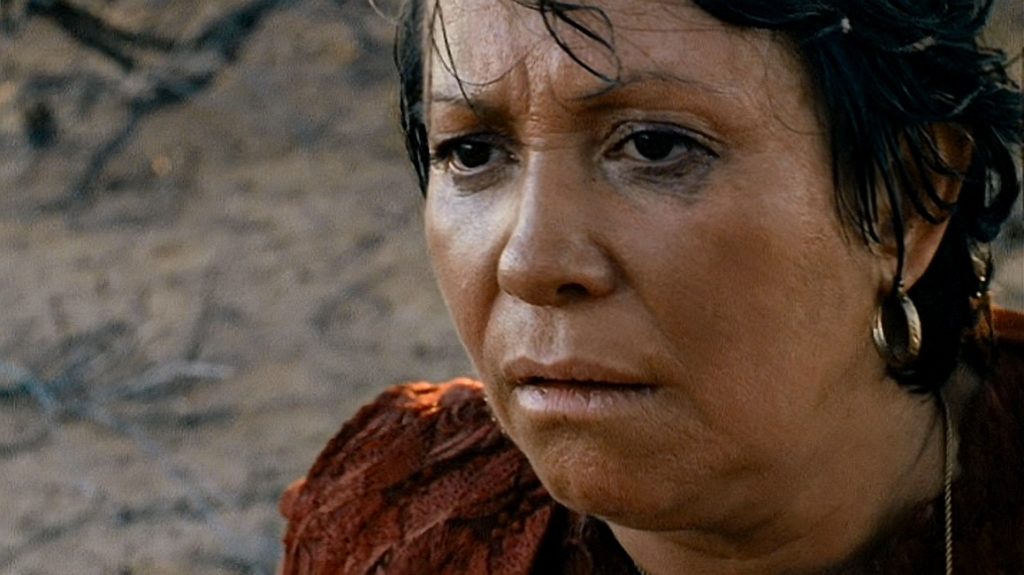
The Perils of Translation: Amelia at the Border
Moving toward the end of the film, everything starts making even more sense, as the connection between the characters (each at one corner of the world) is revealed. Finally, there’s Amelia (Adriana Barraza), the Mexican nanny deeply bonded with Richard and Susan’s children. Her bond transcends the English-Spanish linguistic divide, built on the universal language of love and trust. She is a maternal figure. However, when an urgent family matter—her son’s wedding—compels her to take the children across the U.S.-Mexico border, her inability to speak English becomes a critical and ultimately tragic vulnerability. This part of Babel highlights cross-cultural communication barriers.
Amelia’s intentions are entirely pure, driven by love and a sense of duty. The psychological burden she carries is immense: responsibility for the children, the desire to attend her son’s wedding, and the inherent anxiety of navigating a border crossing with children who are not her own. At the border, her heightened emotional state is compounded by the language barrier. Her attempts to explain, to plead, to convey the urgency and innocence of her situation are met with incomprehension and suspicion.
The border patrol agents, under immense pressure, quickly interpret her inability to communicate and the ensuing chaotic circumstances (exacerbated by her reckless nephew, Santiago) as something sinister. The film powerfully depicts the psychology of suspicion and dehumanization that can arise when communication breaks down in high-stakes situations. For the agents, Amelia transforms from a person into a “case,” a potential threat.
Her genuine distress and emotional pleas are irrelevant; what matters is rigid adherence to procedure and failure to articulate intentions in a comprehensible language. Here, the won’t communicate isn’t primarily on Amelia’s side, but potentially on the side of the system and its agents, who are unwilling or unable to extend empathy or flexibility beyond strict protocol, even when a clear communication gap exists. They won’t or can’t bridge the language gap from their end, leading to harsh judgment.
Amelia’s experience is a chilling portrayal of how linguistic barriers, especially coupled with societal anxieties, prejudices, and a lack of empathy, lead to gross miscarriages of justice and profound psychological trauma. She is stripped of dignity and autonomy. The impact of language on relationships is shown as her caring role is erased by bureaucratic rigidity.
The psychological impact of being utterly misunderstood, of having good intentions twisted, is devastating. She internalizes the injustice, humiliation, and helplessness, which manifest in profound despair upon her deportation. This narrative exposes how language barriers make individuals victims of circumstance, their worth becoming invisible in a communication void. Amelia’s entire ordeal, and the fate of the children she cares for, are a direct consequence of the incident in Morocco, which forces Richard and Susan to remain hospitalized, leaving their children vulnerable to Amelia’s desperate decision.
The Intricate Complexities of the Human Psyche and Relationships: The Butterfly Effect of Disconnection
What Babel masterfully unpacks through these disparate yet interconnected stories is that communication failures aren’t just mishaps. They dig deep into the intricate complexities of the human psyche and human relationships, revealing how profoundly our ability or inability to communicate—and crucially, our willingness to do so—shapes our internal worlds and interactions.
When we cannot understand or be understood, a primal sense of fear often blossoms. This fear, in turn, can quickly morph into mistrust. We become suspicious of what we don’t comprehend, projecting our anxieties and biases onto those whose words and intentions remain opaque. The silence, garbled words, misinterpreted gestures—these gaps create a chasm, transforming potential allies into perceived threats, and simple errors into irreversible tragedies. The film illustrates how, absent clear linguistic understanding, the human mind tends to fill blanks, often with negative assumptions, leading to a breakdown of empathy. This process, where the unknown becomes threatening, is a fundamental psychological defense mechanism, proving catastrophic in Babel.
Babel argues that communication is not just about exchanging information; it’s about sharing understanding, building trust, and fostering empathy. When language fails, these fundamental pillars of human connection crumble, and individuals’ psychological health is directly impacted. The film subtly suggests that many of our global conflicts, our personal misunderstandings, and our societal prejudices stem from this very core issue: a failure to truly hear, truly comprehend, and truly connect with those who are different from us, whether by language, culture, circumstance, or indeed, by choice to remain uncommunicative. The internal landscapes of the characters are deeply affected by their linguistic predicaments. Fear, anger, desperation, isolation, and helplessness are magnified when expression or alleviation through language is compromised.
Furthermore, the film highlights how language shapes not just external interactions but also our internal realities and our very sense of self. Our thoughts are structured by language, emotions articulated through it, and identity intertwined with our ability to express ourselves and be recognized. When this ability is hampered—whether by a literal language barrier, a sensory impairment, or a deliberate refusal to engage—our internal world can become a chaotic, lonely place, mirroring external chaos. This psychological burden drives Chieko’s desperate acts, fuels Richard’s rage, and crushes Amelia’s spirit. The tragedies in their paths are a direct consequence of both the inability and the unwillingness of individuals and systems to bridge communication gaps.
The film’s genius lies in its demonstration of the butterfly effect in human affairs. A rifle exchanged between an American and a Japanese hunter in Morocco, then sold to a local shepherd, leads to a stray bullet hitting an American tourist. This single, almost accidental act of violence, born from a confluence of minor choices and linguistic distance, sets off a chain reaction. It grounds Richard and Susan in a foreign land, leading to Amelia’s desperate decision to cross the border with their children. This, in turn, contributes to Chieko’s father being questioned and her emotional distress intensifying. Babel makes a powerful statement: in our globally interconnected world, no action, no word (or lack thereof), is truly isolated. The ripples of miscommunication, fear, and misunderstanding can travel across oceans, impacting lives and psyches in unforeseen, devastating ways. It is a cinematic tapestry where every thread, no matter how thin, connects seemingly disparate lives in a web of cause and effect, driven by the triumphs and failures of human communication.
A Call for Empathy in a Fragmented World
Babel serves as a stark and urgent reminder that our shared humanity is often obscured by the very tools we use to connect, and tragically, by the very lack of those tools. Language, intended as a bridge, can just as easily become an impenetrable wall. In an increasingly interconnected yet fragmented world, Babel‘s message resonates more powerfully than ever.
The film implores us to look beyond the surface, recognizing the profound human cost of misunderstanding and the deep psychological wounds it inflicts. It’s a powerful argument for cultivating understanding—not just of different languages, but of different perspectives, experiences, and the silent struggles of others. It suggests that active listening, a willingness to bridge divides, and a fundamental commitment to empathy are vital necessities for fostering deeper human connection, preventing needless suffering, and ultimately, building a more compassionate and truly connected global community.
By stripping away the comfort of familiar words and forcing its characters into situations where language becomes a weapon or a barrier, Babel holds a mirror to our own assumptions and biases. It challenges us to consider: how often do we fail to truly understand simply because we are unwilling to try? How many tragedies, both personal and global, could be averted if we were all a little more fluent in the language of empathy, if we recognized the profound psychological impact of being truly, utterly unheard, or deliberately ignored? If we understood the far-reaching consequences of our seemingly small actions?
The film leaves us not with easy answers, but with lingering questions and a profound sense of the fragile, yet resilient, nature of human connection in the face of immense linguistic and cultural divides. Its enduring power lies in its ability to expose the hidden psychological landscapes shaped by our words, our silence, and our choices to communicate, or not.
What other films have you found that powerfully explore the intersection of language, human will, and the human psyche, and demonstrate the global interconnectedness of our actions?