
Imagine reading a story where a young woman ascends to heaven while folding laundry, and the family’s main reaction is one of wistful sorrow, not shock. Imagine a family kitchen where emotions are so potent they are literally baked into the food, causing anyone who eats it to weep with the cook’s sorrow. This is the world of magic realism, a literary genre that weaves the impossible into the fabric of everyday life.
It is a style that doesn’t invent new worlds like fantasy; instead, it holds up a mirror to our own reality and reveals the cracks where the marvelous has always been seeping through. For readers, it’s a powerful and unique experience.
The History and Origins of Magic Realism
While magical realism is most famously associated with the Latin American literary boom of the 1960s, its conceptual origins trace back to Europe a few decades earlier.
The term itself, magischer Realismus, was coined in 1925 by the German art critic Franz Roh to describe a new style of painting. The term migrated to literature and found its most fertile ground in Latin America. In the 1940s, Cuban writer Alejo Carpentier proposed a similar concept he called lo real maravilloso—the marvelous real. Carpentier argued that the reality of Latin America—with its blended cultures, violent history, and enduring myths—was inherently marvelous.
This idea ignited a generation of authors during the Latin American Boom of the 1960s and 70s. Writers like Gabriel García Márquez and Julio Cortázar used the magical realism style to write about social upheaval and post-colonial identity crises, representing a reality that often felt too absurd for conventional storytelling.
Defining Magical Realism: The 4 Core Elements
So, what is magical realism at its core? It is a literary style where a realistic view of the world is invaded by magical or fantastical elements, which are treated as mundane. It is defined by four key characteristics.
A Grounded, Realistic Setting
This is the bedrock of the genre. The story is firmly set in our world, often with hyper-realistic detail. The political turmoil in Isabel Allende’s Chile or the poverty of a Colombian village in a García Márquez novel are as crucial as any supernatural event. This grounding makes the magical elements more impactful because they happen in a world we recognize.
Matter-of-Fact Integration of the Marvelous
This is the genre’s signature move. Miracles and impossible events are presented with a completely deadpan tone, as if the most ordinary thing has taken place. The narrator and the characters accept these occurrences as normal. This seamlessness forces the reader to suspend disbelief and accept the story’s unique logic, where the natural and supernatural coexist. This is a primary example of magical realism in practice.
Fluid and Non-Linear Time
In many magical realism books, time is not a straight line. It can be cyclical, with events repeating across generations. The past is often a living presence that actively influences the present, and prophecies can shape the future.
Rich Symbolism and Allegory
The “magic” is almost always symbolic, serving as a metaphor to explore complex themes like colonialism, trauma, religious dogma, or political critique, to name a few. A plague of insomnia that erases memory, for instance, is a powerful allegory for the dangers of historical amnesia.
Magical Realism vs. Fantasy vs. Surrealism: What’s the Difference?
Many readers wonder if magical realism is just another name for fantasy. While related, there are crucial differences.
Magical Realism vs. Fantasy
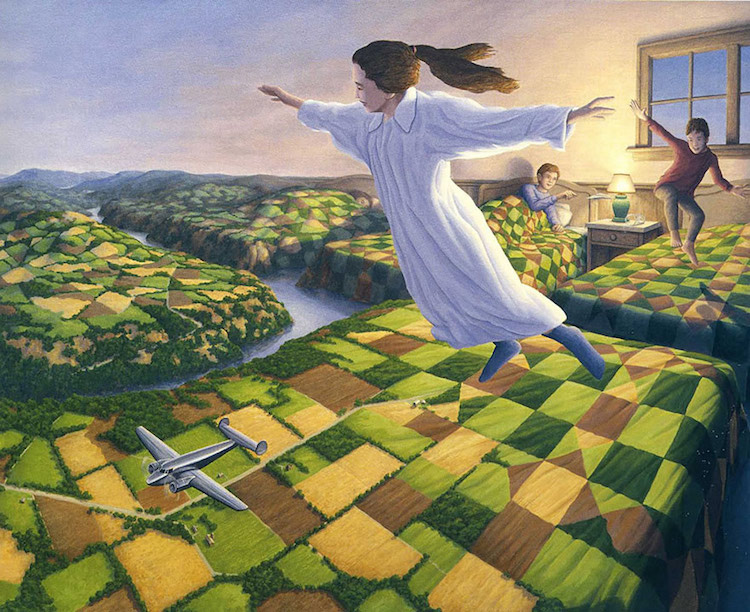
The key difference is the world itself. Fantasy literature (like The Lord of the Rings) is typically set in a secondary world with its own established rules for magic. In magical realism, the story is set in our world, and the magic is an unexplainable, organic part of that reality. Fantasy often focuses on epic quests, while magical realism uses its fantastic elements to comment on human psychology and society.
Magical Realism vs. Surrealism
This is a finer distinction. Surrealism is interested in the subconscious mind and dreams; its bizarre imagery is often intentionally jarring and designed to explore a character’s internal psychology. Magical realism’s strangeness, by contrast, is presented as an external, objective part of the environment, smoothly integrated into reality.
8 Best Magical Realism Authors (And Their Must-Read Books)
While countless authors have used this style, this list highlights eight of the most celebrated practitioners whose work defines the genre.
Gabriel García Márquez (Colombia)
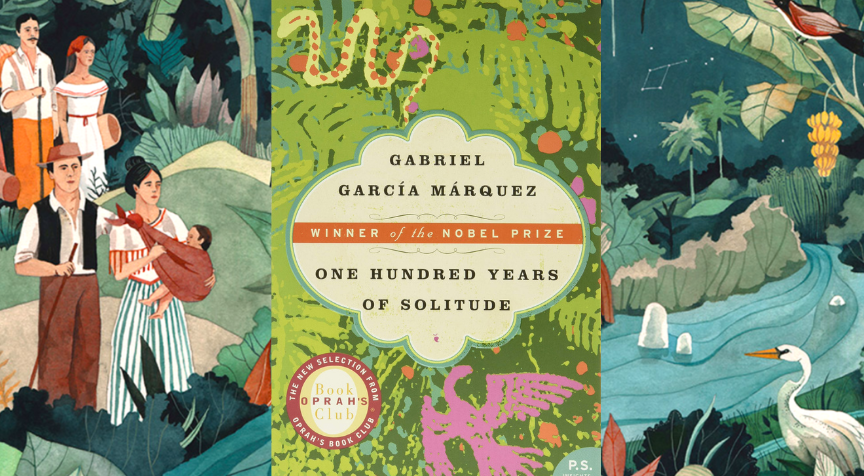
The Patriarch. You cannot discuss this genre without “Gabo.” His 1967 novel One Hundred Years of Solitude brought magical realism to global fame and won him the Nobel Prize in Literature. His work is the quintessential example of the Latin American Boom.
Essential Reading: One Hundred Years of Solitude, Love in the Time of Cholera.
Isabel Allende (Chile)
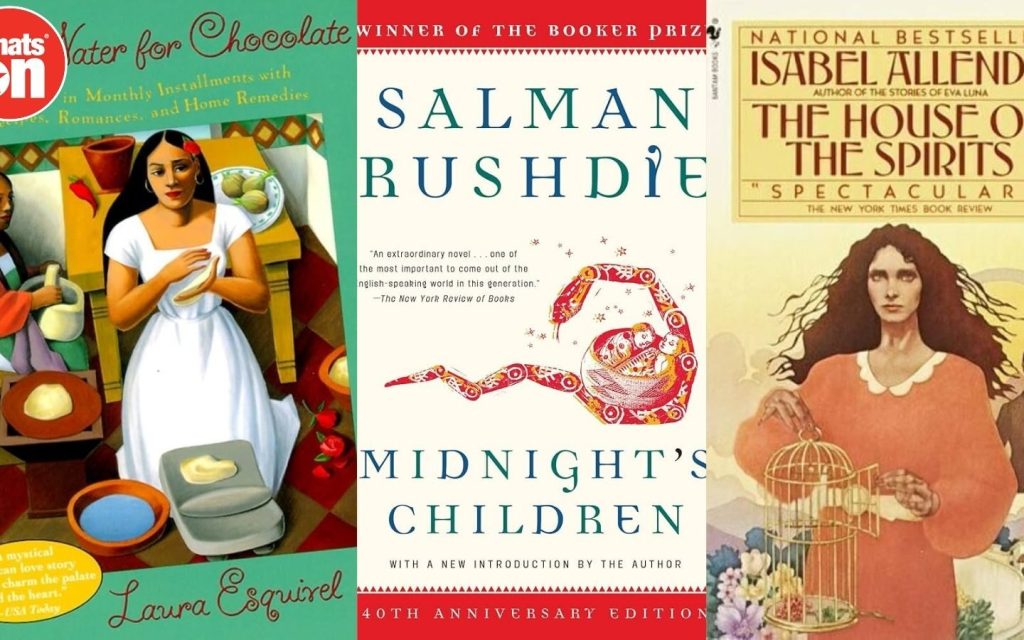
The Great Storyteller. Allende’s novels are epic family sagas rich with passion, political turmoil, and spirited characters who have clairvoyant abilities. Her magic is deeply personal, highlighting the resilience of her characters against the backdrop of Chilean history.
Essential Reading: The House of the Spirits, Eva Luna.
Jorge Luis Borges (Argentina)
The Intellectual Architect. Borges is the brilliant forerunner whose philosophical fictions are like intricate thought experiments. He imagines infinite libraries, maps that are the size of the territory they represent, and men who cannot forget. His work laid the intellectual groundwork for the genre.
- Essential Reading: The collections Ficciones and The Aleph.
Toni Morrison (United States)
The American Conscience. A Nobel laureate, Morrison masterfully used magical realism to confront the haunting legacy of slavery in America. In her novel Beloved, a ghost is not just a ghost but the physical embodiment of historical trauma, making abstract pain terrifyingly tangible.
- Essential Reading: Beloved, Song of Solomon.
Salman Rushdie (India/United Kingdom)
The Post-Colonial Chronicler. Rushdie’s sprawling, energetic novels use magical realism as a tool for political allegory. In Midnight’s Children, children born on the stroke of India’s independence are gifted with supernatural powers, their fates tied to the destiny of the nation itself.
- Essential Reading: Midnight’s Children, The Moor’s Last Sigh.
Laura Esquivel (Mexico)
The Master of Kitchen Magic. Esquivel’s famous novel Like Water for Chocolate locates magic in the domestic sphere of the kitchen. Her protagonist, Tita, is a cook whose emotions are transmitted through her food, making it a powerful and accessible magical realism book.
- Essential Reading: Like Water for Chocolate.
Joanne Harris (United Kingdom)
The Alchemist of Appetites. Harris offers a European flavor of magical realism steeped in folklore and sensory experience. In Chocolat, her protagonist’s confections act as catalysts for change in a repressed French village, challenging authority with a subtle, ambiguous magic rooted in pleasure and nature.
- Essential Reading: Chocolat, The Lollipop Shoes, The Strawberry Thief, Peaches for Monsieur Le Cure, Blackberry Wine.
Haruki Murakami (Japan)
The Modern Master of Surreal Alienation. Murakami’s fiction functions as a contemporary, urban form of magical realism. He captures the loneliness of modern life by calmly interrupting it with the unexplainable: talking cats, portals to other worlds, and two moons in the sky.
- Essential Reading: Kafka on the Shore.
Why Magical Realism Remains So Popular Today
In our hyper-rationalized world, why does magical realism continue to captivate us?
Perhaps it is because it validates a feeling we all have: that there is more to the world than meets the eye. It gives us a language for the mysteries that defy simple explanation—the uncanny coincidences, the weight of history we feel but cannot see, the overwhelming power of love or grief. It is not an escape from reality, but a deeper immersion into it, I would say.
Magical realism cracks open the shell of the ordinary and asks us to look again. It tells us that our histories, emotions, and myths are as real as the ground beneath our feet. And in doing so, it performs the ultimate magic trick: it makes our own world feel new again.

Your Turn to Explore
I hope this guide has helped you understand the rich world of magical realism. The journey is a personal one, for sure, filled with authors and stories that will resonate in different ways.
Who are your favorite magical realism authors? What book would you recommend to a newcomer? Share your thoughts and recommendations in the comments below!